Wallpaper removal
We take the old paper off without taking the wall with it, then seal and prime the surface for new paper or paint. On a re-papering job this is the stage where walls get damaged, so we treat it as part of the work, not a warm-up.
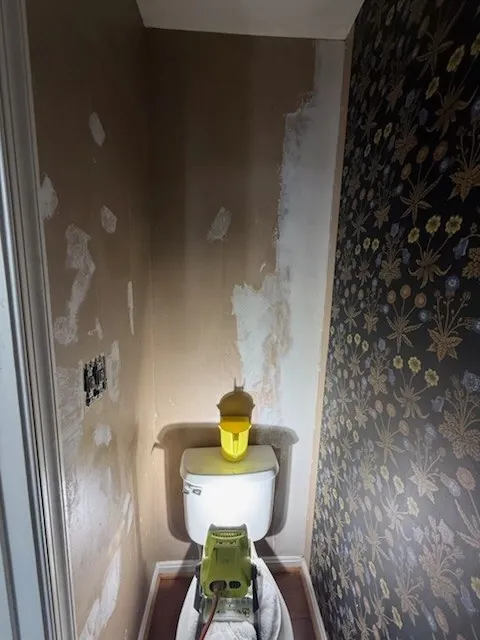
- Room
- Powder room
- Stage
- Mid-job
- Wall
- Old surface stripped and patched
Where walls get damaged
Drywall is the usual casualty. Its surface is a layer of paper, and if the old wallpaper was hung without a primer underneath, the paste is stuck straight to that paper face. Pull hard or scrape aggressively and the brown paper of the drywall tears away in patches. Paint or new wallpaper over torn drywall face will bubble and show every patch.
Plaster walls are tougher, but old plaster in DC rowhouses may have several layers of paper on it, sometimes painted over, and the bottom layers can be stuck very firmly. Under them there may be cracked or loose plaster that has been held together by the paper.
We take paper off in the gentlest way that works for that wall, and if what we find underneath changes the plan, we stop and tell you.
Finding out what is on the wall
A small test patch tells us what we are dealing with. Some modern papers are strippable: the whole sheet peels off dry, leaving the wall clean. Others are peelable: the face layer peels off and leaves a backing that has to be soaked off. Traditional papers and anything painted over need soaking. Vinyl faces keep water out, so the face has to come off or be perforated before water can reach the paste.
We avoid aggressive scoring tools on drywall, because the small holes they make go through the paper and into the drywall face. Where perforating is needed, we do it lightly. Warm water with a wallpaper stripping solution, or steam on stubborn plaster, softens the old paste so the paper slides off with a broad scraper held flat.
After the paper is off
Bare wall is not finished wall. Old paste left on the surface can make new paint crack and craze and can stop new adhesive from bonding, so it is washed off and the wall is left to dry right through. In a humid DC summer that drying takes longer than in winter, and we wait for it.
Stripping shows us the wall nobody has seen for years. Torn drywall face is the first thing to deal with, and it is sealed before any water-based patch or primer touches it, because wet brown paper swells and bubbles. Gouges, cracks and loose plaster come next, and a wall that is rough all over may need a skim coat. The last coat is a primer chosen for what goes on next.
That repair work is covered in more detail on our wall repair and surface prep page.
Older houses and lead paint
Many DC homes were built before 1978, when lead-based paint was still used in houses. If old paint under or over the wallpaper might contain lead, sanding and dry scraping can create hazardous dust. Federal rules on renovation in pre-1978 housing exist for this reason. Before removal in an older house, we ask about the house's age and any lead testing done, and we talk through how the work will be handled before it starts. If you have a lead inspection report, please share it with us.
Bathrooms, kitchens and ceilings
Paper in a bathroom or kitchen may have had years of steam and splashes behind it, and the wall underneath may show signs of moisture: soft drywall, mold spots, or plaster that has lost its strength near the tub or sink. We look closely at these areas once the paper is off, and if the wall is damaged by water, the cause and the damaged material need dealing with before anything new goes up.
Around vanities, toilets and mirrors, removal is slower because of all the edges, and some fixtures may need to come off to do it properly. We agree beforehand what will be removed and who reconnects it.
Keeping the house clean
Soaking paper off a wall puts a lot of water and paste where you do not want it. Floors are covered with drop cloths that do not let water through, the paper comes off into bags as we go, and wet scraps are not walked through the house. Power is turned off to outlets and switches on the walls we are soaking, and cover plates come off so water cannot run into the boxes.
Removal before painting
If the room is going to be painted rather than re-papered, the steps after stripping stay the same; only the primer changes. Paint is less forgiving of leftover paste than paper is, though. A film of old adhesive that new paper would cover can show through paint as blotches or fine cracks, so where paint is the plan we take extra care over the washing and check the wall in side light before priming.
How long removal takes
The paper and the wall decide it. One layer of strippable paper on primed drywall can come off quickly, while several painted layers on old plaster can take far longer and need more repair afterwards. We do a test area during the estimate where we can, so the quote reflects the wall you actually have.
What the job includes
The same order applies when the wall will be painted afterwards; only the last primer is different.
Test the paper
A small area tried dry, then wet, to tell strippable from peelable, vinyl or painted-over paper.
Protect the room
Waterproof drop cloths down; outlets and switches on the wet wall switched off and their plates taken off.
Release the paper
Dry peel where it allows; otherwise soak with warm water and stripping solution, or steam on stubborn plaster.
Lift it off flat
Broad scraper held flat so the wall face is not gouged; light perforating only where needed.
Wash off old paste
Residue removed and the wall left to dry fully.
Seal and repair
Torn drywall face sealed, dents filled, plaster cracks repaired, skim coat where the surface is rough.
Prime for what is next
Wallpaper primer for new paper, or the right primer for paint.
From the gallery
See all photos
Questions
Can you paint over old wallpaper instead?
It can be done, but we advise against it. The water in the paint can soften the old paste and raise bubbles, old seams show through the paint, and the paper becomes much harder to remove later.
Can new wallpaper go over old wallpaper?
We do not recommend it. Wet paste on top can release the layer underneath, so the new paper is only as secure as the old one, and the next removal has two layers to get through.
Why does drywall tear when wallpaper comes off?
If the old paper was hung on unprimed drywall, the paste is bonded to the drywall's paper face. Pulling or scraping hard takes that face with it. Sealing the torn areas properly before repair is the fix.
Is steaming safe for my walls?
On plaster, steam is often the best way to soften stubborn paste. On drywall we use it sparingly, because too much moisture softens the drywall face.
My house is old. Could there be lead paint?
If the house was built before 1978, it may have lead-based paint somewhere. Tell us what you know about the house and any testing done, and we will talk through how removal will be handled before work starts.
Do you remove wallpaper from ceilings?
Yes. Working overhead is slower, and bare ceiling plaster may need repair, but we follow the same steps as on a wall.
Where we do this
Get an estimate
Tell us about the wall. We call back within one business day.