Grasscloth and specialty materials
Grasscloth, sisal, jute, paperweaves, silk and cork are the least forgiving materials we hang. No two rolls are quite the same color, the seams never fully disappear, and a drop of paste on the face can leave a mark for good.
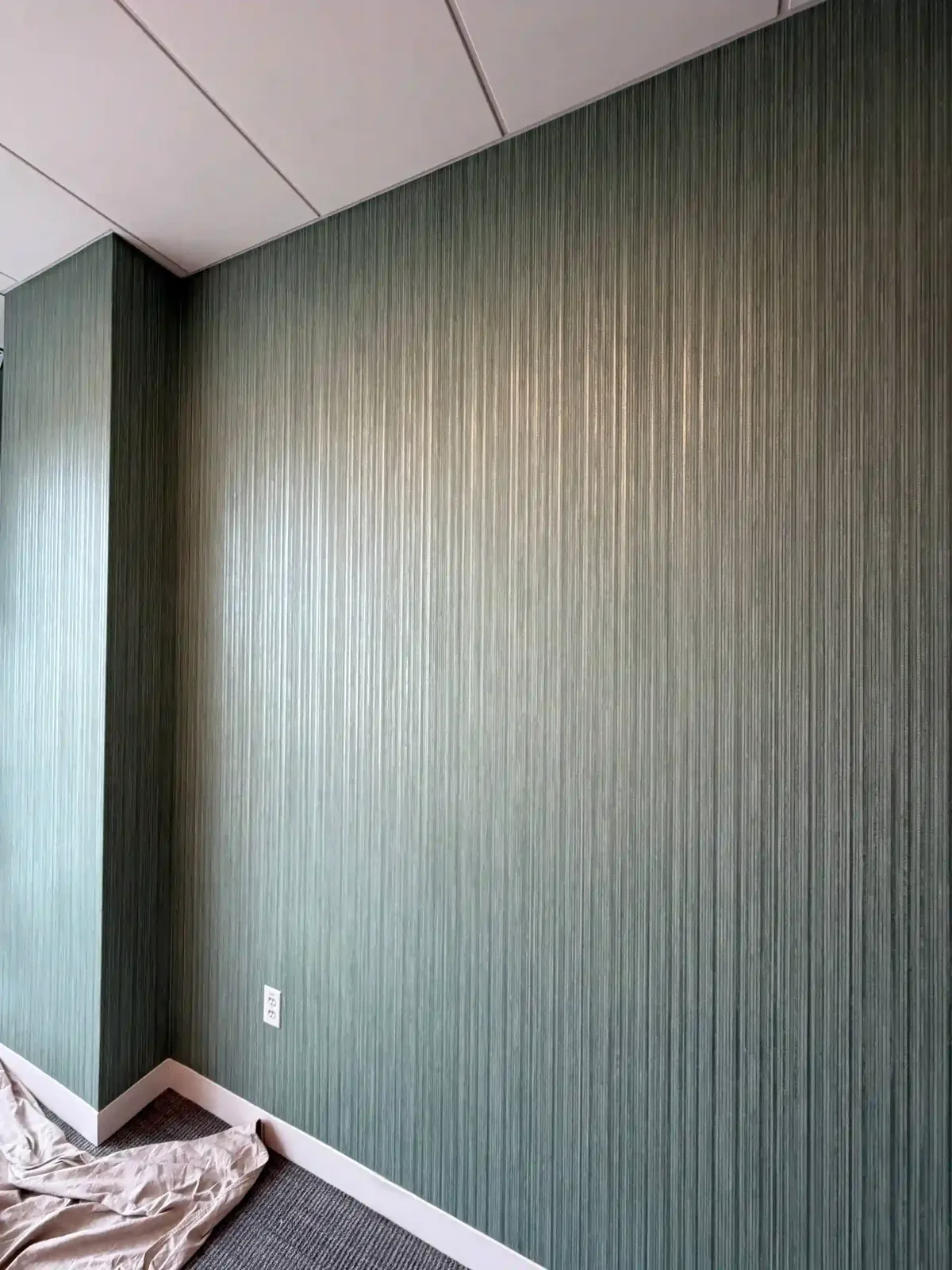
- Material
- Grasscloth
- Color
- Green-gray
- Seams
- Visible, as natural fiber is
Seams and shading
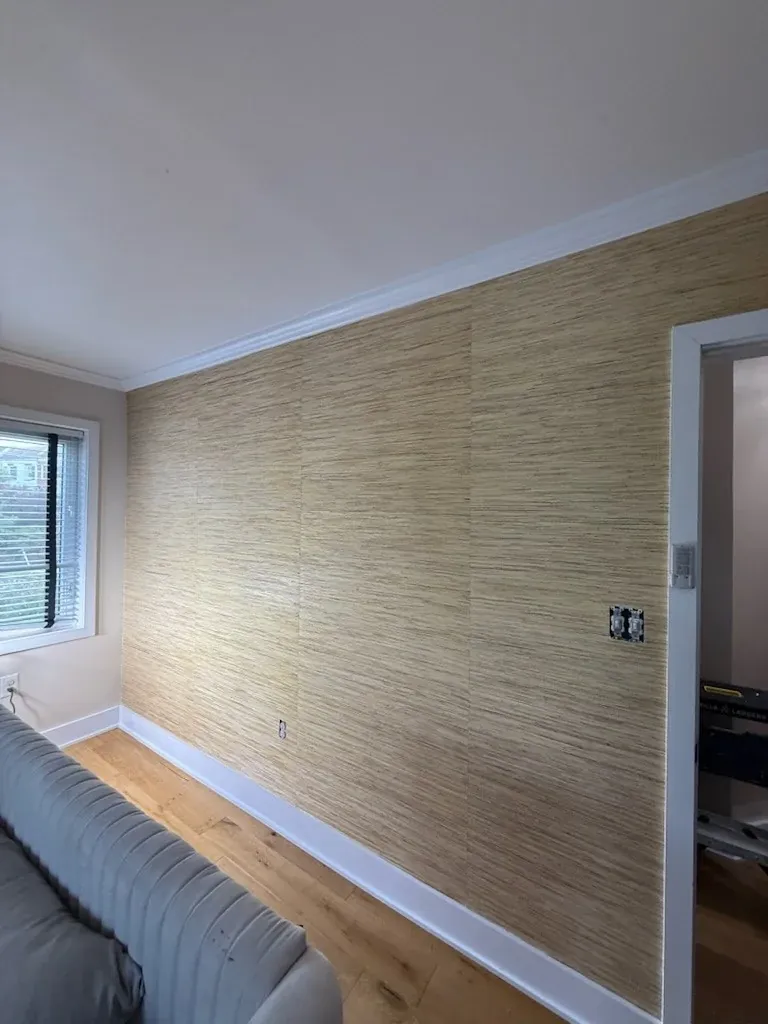
Hang two strips of printed paper side by side and the pattern match pulls the eye across the join. Grasscloth has no pattern to do that. Its strands of grass or other plant fiber, woven onto a paper backing, vary in color and thickness along a roll and between rolls, so neighboring strips meet as two slightly different panels of texture. That variation is what people buy it for. Most manufacturers say this openly in their hanging instructions: seams and shading between strips are a natural characteristic, not a defect.
Our part is to manage that variation so the wall reads as one even surface rather than a row of stripes, and that is where most of the skill in hanging naturals lies.
Checking rolls before anything is cut
Every roll is unrolled and looked at in good light before a blade touches it. Rolls should share the same run or batch number; we check the labels and set aside any that do not. Then we lay out the first few feet of each roll side by side and look for color shift, thick and thin areas, and edge shading, where one edge of a roll is darker than the other.
Strips are then planned in an order that puts the closest-matching edges together, and the most uneven rolls go to places where they will be broken up by doors, windows or furniture. If a roll has a clear flaw, we stop and call you before using it, because once it is pasted it cannot go back.
When the maker calls for reverse-hanging, alternate strips are turned end for end, so the darker edges meet each other at one seam and the lighter edges at the next.
Paste and the face of the paper
Paste on the face of grasscloth can leave a dark mark that will not wash out, and wetting or sponging the fibers can raise them or change their color. So we work clean. The adhesive is the clear one the manufacturer recommends, applied to the back or the wall as instructed and spread to an even thickness, since thick spots can darken the fibers through the backing. Wet edges are kept away from the face as each strip is handled. Seams are pressed with a clean, dry roller, not a wet sponge.
Naturals are also slow to forgive overworking. Each strip is placed once, brushed or smoothed gently into place, and trimmed with a sharp blade changed often, because a dull blade drags the fibers and leaves a ragged edge.
Where naturals belong
In living rooms, dining rooms, bedrooms, studies and offices grasscloth is at home. It is a poor fit for bathrooms with showers or tubs, kitchens near the sink or range, and anywhere it will be splashed, because water stains the fiber and the material cannot be scrubbed. In a powder room with no shower it can work well if the paper stays clear of the sink. Some manufacturers make vinyl wallcoverings that imitate grasscloth for those rooms.
Its thickness hides small dips in older plaster better than a thin paper does, but it will not hold up loose plaster or flaking paint, so the wall gets the same repairs and primer as for any paper. With thin or open weaves the primer color matters too, because the wall can show between the fibers; we choose a light, even shade for those.
Other specialty materials
Silk and fabric-backed wallcoverings ask for the same clean handling as grasscloth, and their makers often name a specific adhesive. Cork and other thick naturals are heavy enough that the wall behind them has to be firm. With metallic and foil papers the problem is light: a shiny face picks out any lump, so the wall has to be very flat. On flock, paste must never reach the velvet, and on paintable embossed papers we roll seams lightly so the relief keeps its shape. For each, the maker's instructions come first; if they conflict with what we would normally do, we follow the maker and tell you why.
Living with naturals
Natural fibers can fade with strong, direct sunlight over time, as fabrics do, so a sunny wall may change color faster than a shaded one. Blinds or UV-filtering window film help. Grasscloth is also softer than vinyl: a suitcase dragged along a hallway wall will mark it. On a busy wall, a chair rail or wainscot below the grasscloth takes the knocks instead.
Repairs are possible if you keep offcuts from the same run. A damaged area can often be patched by cutting out a full strip width and replacing it, which looks far better than a small patch in the middle of a strip. That is one more reason to keep the spare roll.
Ordering naturals
Order every roll at the same time from the same run, plus at least one spare, and check the run numbers when the rolls arrive. Because of shading, natural materials can mean a little more waste than printed paper. Many naturals are sold by the single or double roll in widths around 36 inches, so roll counts are not the same as for standard papers; send us the product sheet and the wall sizes and we will work it out.
What the job includes
Most of the steps happen before any paste is mixed. The roll check and strip order are what set a natural wallcovering job apart.
Check the wall
Flatness, old paper, paint and moisture; a light, even primer color chosen for open weaves.
Check every roll
Run numbers matched, rolls unrolled in good light, shading and flaws looked for before any cut.
Plan the strip order
Closest-matching edges together; reverse-hung if the maker says so; uneven rolls sent to broken-up walls.
Prime and let it dry
A wallpaper primer suited to the adhesive and the material.
Hang clean
Manufacturer's clear adhesive, even paste, no paste or water on the face, seams pressed with a dry roller.
Trim sharp
Fresh blades at ceiling, base, casings and outlets so the fibers cut clean.
Review in daylight
We look at the wall with you once it is up, before we pack up, and leave you the labels and spare roll.
From the gallery
See all photos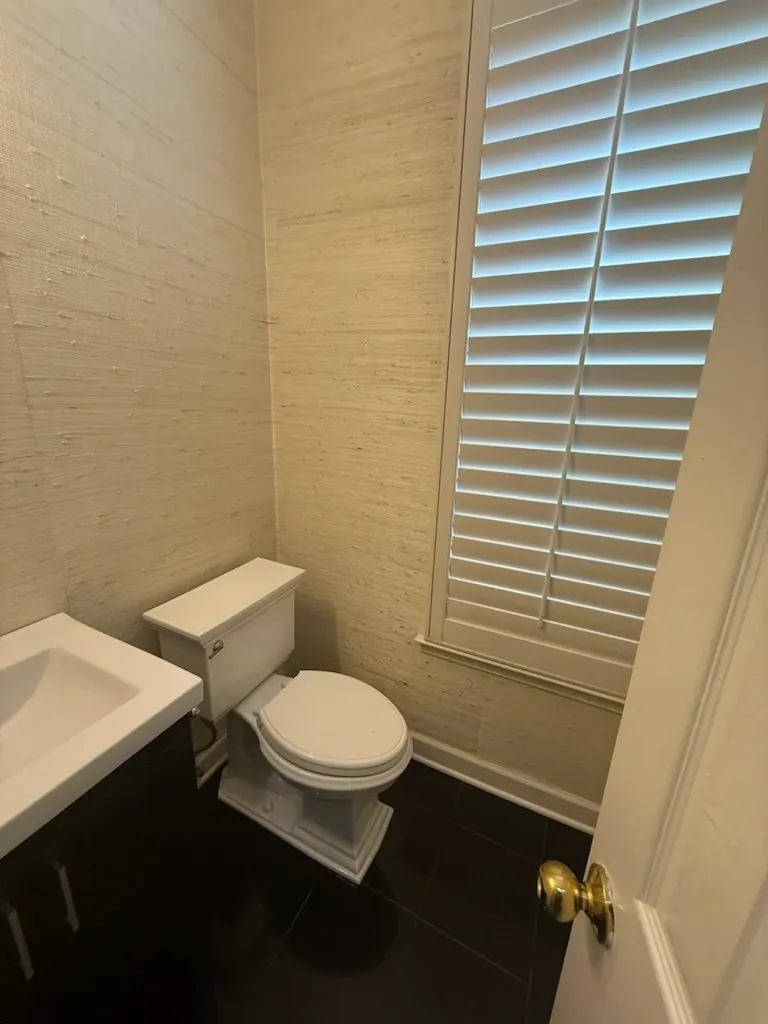
Questions
Will I see the seams on grasscloth?
Yes, a little. Natural fiber does not have a pattern to hide a seam, and manufacturers describe visible seams and shading as part of the material. Careful roll checking, strip order and reverse-hanging keep them as even as possible.
Can grasscloth go in a bathroom?
In a powder room without a shower, kept clear of the sink, it can. Near showers, tubs or anywhere it will be splashed it is a poor choice, because water stains natural fiber. Vinyl look-alikes are made for those rooms.
Why do some strips look darker than others?
Natural fibers vary in color from roll to roll and often from one edge of a roll to the other. That is why we check rolls before cutting, keep one run number, and reverse-hang where the maker recommends it.
Can grasscloth be cleaned?
Gently. Dust it with a soft brush or a vacuum brush attachment. Water and cleaning products can stain the fiber, so spills should be blotted, not scrubbed.
Can you hang grasscloth on old plaster?
Yes, after the plaster has been repaired and primed. Grasscloth hides minor surface variation better than thin papers, but loose or cracked plaster still has to be fixed first.
How much grasscloth should I order?
Order everything at once from one run, with at least one spare roll. Widths and roll lengths vary a lot with naturals, so send us the product sheet and your wall sizes and we will count strips for you.
Get an estimate
Tell us about the wall. We call back within one business day.