Materials, and how they hang
What a wallcovering is made of decides how it is pasted, how the seams are made and what the wall underneath has to be like. Ten common kinds, with what each needs.
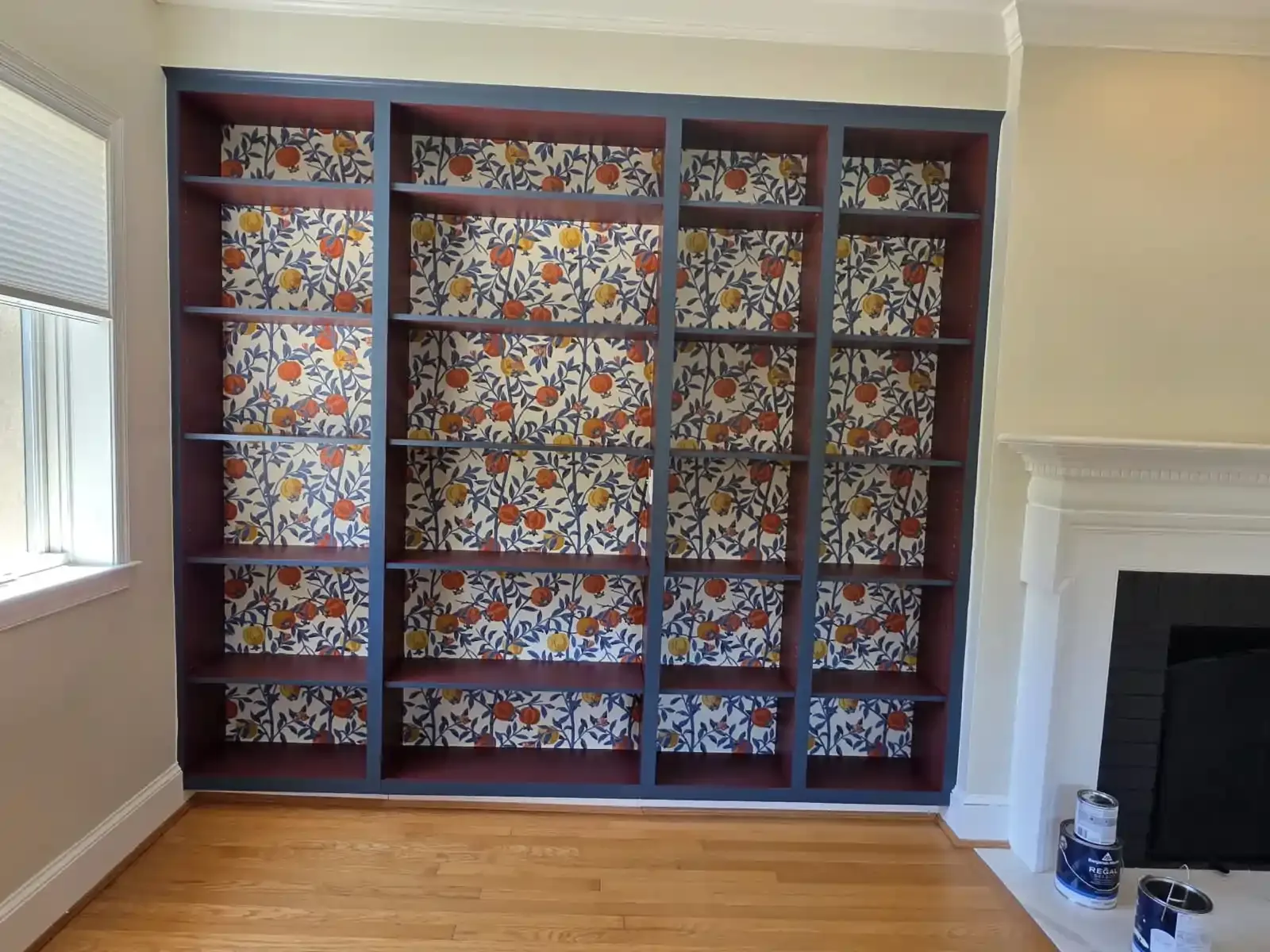
- Paper
- Floral print
- Where
- Bookcase backs
Non-woven
- Paste
- On the wall
- Seams
- Butted
- Comes off
- Dry, in whole strips
Many designer papers today are non-woven, a blend of natural and synthetic fibers that does not swell when wet. The adhesive goes on the wall and the dry strip goes into it, so there is no booking time and each strip stays the size it was cut. Non-wovens are forgiving to hang and come off easily later, so they suit most rooms.
Traditional paper
- Paste
- On the back
- Seams
- Butted
- Handle
- With care
These need booking. Each strip of pulp or coated paper, including many hand-printed and reproduction designs, is pasted on the back, folded paste to paste and left for a set time so it expands before it goes on the wall. Every strip gets the same booking time, or the seams will not match. The face marks easily, so paste must stay off it.
Pre-pasted
- Paste
- On the back, activated with water
- Seams
- Butted
- Good for
- Small rooms
Water activates the dry adhesive already on the back. That is convenient, but factory paste is often thin, so we usually add a light coat of activator or adhesive to keep the edges down, especially in humid rooms.
Vinyl and vinyl-coated
- Paste
- Per the maker, usually on the back
- Seams
- Butted
- Cleaning
- Wipeable or scrubbable
A plastic surface that can be wiped or scrubbed makes these a sensible choice for kitchens, bathrooms, halls and children's rooms. They weigh more than paper and need a strong adhesive. A good wallpaper primer underneath lets them release cleanly when it is time for a change.
Commercial vinyl, 54-inch
- Paste
- On the back
- Seams
- Double-cut
- Fire rating
- Per the project spec
Rolls are wide, usually around 54 inches, and come in weights such as Type II for corridors and offices. Strips are overlapped and double-cut through both layers, so the two edges meet exactly. The required fire rating is set by the project specification and the local code official.
Grasscloth and naturals
- Paste
- On the back, or as the maker says
- Seams
- Butted, always visible
- Face
- Keep dry
Grasscloth, sisal, jute and paperweave put natural fibers on a paper backing, and every roll shades a little differently. We open and compare rolls from one run, often reverse alternate strips, and put the most even rolls on the most visible wall. Up close the seams will show, because that is the material. The face must not get wet or pasted.
Silk and fabric
- Paste
- As the maker says
- Seams
- Butted
- Wall
- Often lined first
Any paste on a silk or fabric face leaves a mark, and any bump in the wall shows through the sheen. A lining paper hung first often gives the smooth base these need. Clean hands and slow work are most of the job.
Mural panels
- Order
- Numbered panels
- Seams
- Butted or overlapped, per the maker
- Before ordering
- Measure the wall
A mural has no repeat to hide a mistake in. Its numbered panels go up in order from a plumb line, so the picture runs straight across every join. Measure the wall before ordering and allow a few inches of bleed on each side for trimming.
Peel-and-stick
- Adhesive
- Self-adhesive
- Seams
- Butted or overlapped
- Wall
- Smooth, fully cured paint
Peel-and-stick is sold as easy to remove, and on a good wall it is. On fresh or flat paint it can pull paint off when it comes down, and in humid rooms it can lift at the seams. It needs a smooth wall and paint that has fully cured.
Metallic and foil
- Wall
- Perfectly smooth
- Seams
- Butted
- Outlets
- Power off to trim
Reflective surfaces show every flaw in the wall beneath them, so the wall is skimmed smooth and primed first. Some foils conduct electricity, and the power is switched off before we trim around outlets and switches.
Check the label first
The label or the maker's product page says how a paper is pasted and hung. If you are unsure which kind you have, send us the link before you order and we will tell you what your wall needs.
Get an estimate
Tell us about the wall. We call back within one business day.