Commercial wallcovering installation
Wide-goods vinyl, printed graphic walls and designer papers for offices, restaurants, shops, clinics and lobbies. We hang what the specification names, inside the hours the building gives us, and leave the room ready for the next trade.
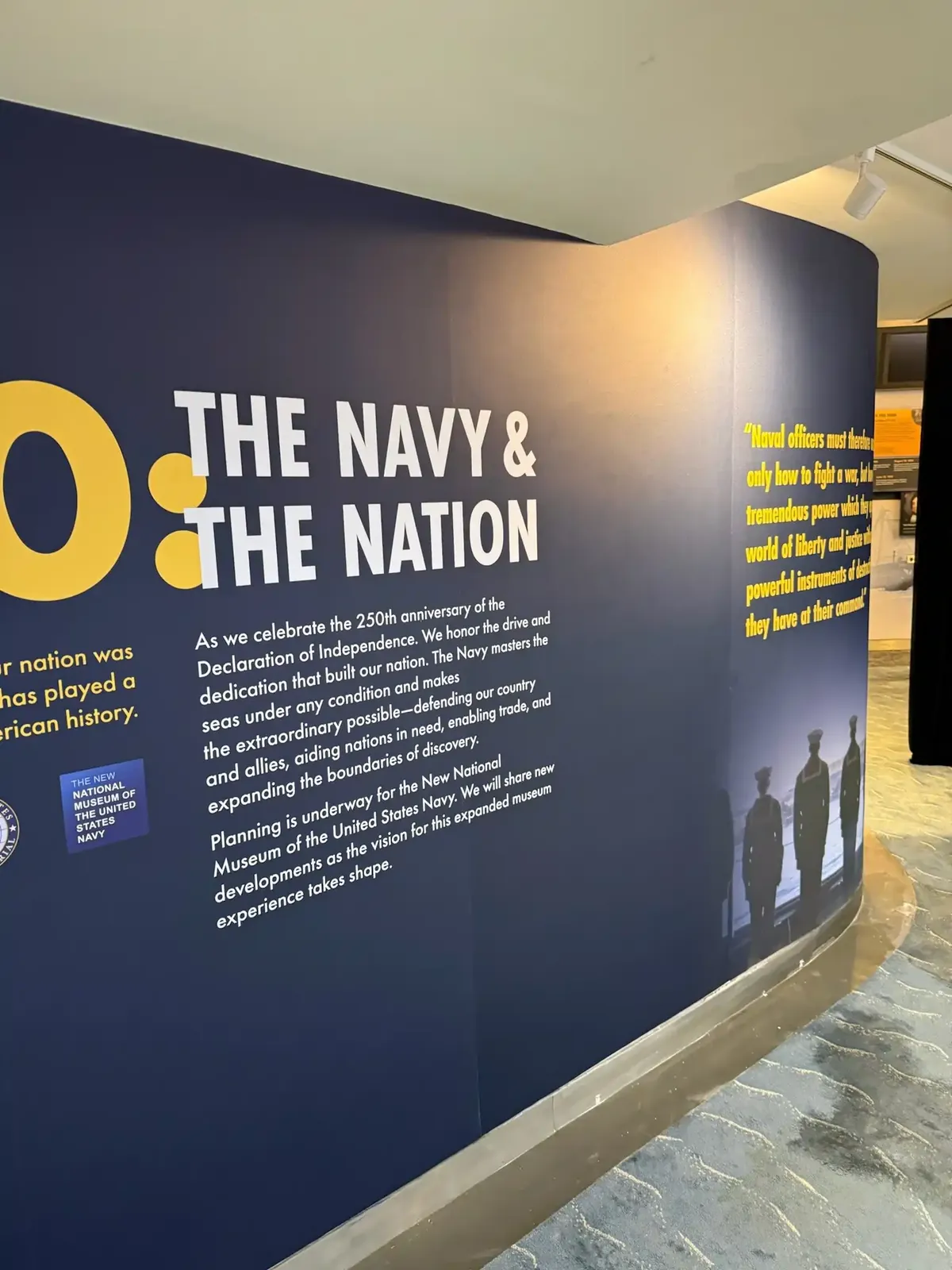
- Setting
- Commercial interior
- Material
- Printed graphic wall
- Wall
- Curved
Working to a specification
On a commercial job we are rarely the ones choosing the material. An architect or interior designer writes the specification, and it can name the product, the adhesive, the primer and even where the seams fall. We hang exactly that, in the window the schedule leaves us, and if something on site does not match the drawings we raise it early, while there is still time to change course. The walls are longer than in a house, the goods are wider and heavier, and the finished surface has to stand up to chairs, carts and daily cleaning for years, and a good specification is written with all of that in mind.
A job can be one reception wall with a logo graphic or a whole floor of corridors in textured vinyl. A restaurant dining room in a designer paper, or a mural in a treatment room, is handled the same way: specification first, then the wall, then the schedule.
Wide-goods vinyl
Most commercial vinyl comes in 54-inch widths on long bolts. It is graded by weight and durability, with Type II being a common choice for offices, corridors and hospitality. A strip that wide and that long is heavy when pasted, so it goes up with a premixed clear or commercial-grade adhesive and two people on long walls. The seams are normally double-cut, which makes them very hard to see. The risk is the blade: cut too hard and it scores the wall under the seam, and a scored wall can split the seam later. We control the depth of that cut on every seam.
Some wide vinyls shade slightly across the width of the bolt. Where the manufacturer tells us to reverse-hang, turning alternate strips end for end, the instruction is followed even if the shading is hard to see on the day.
Printed graphics and murals
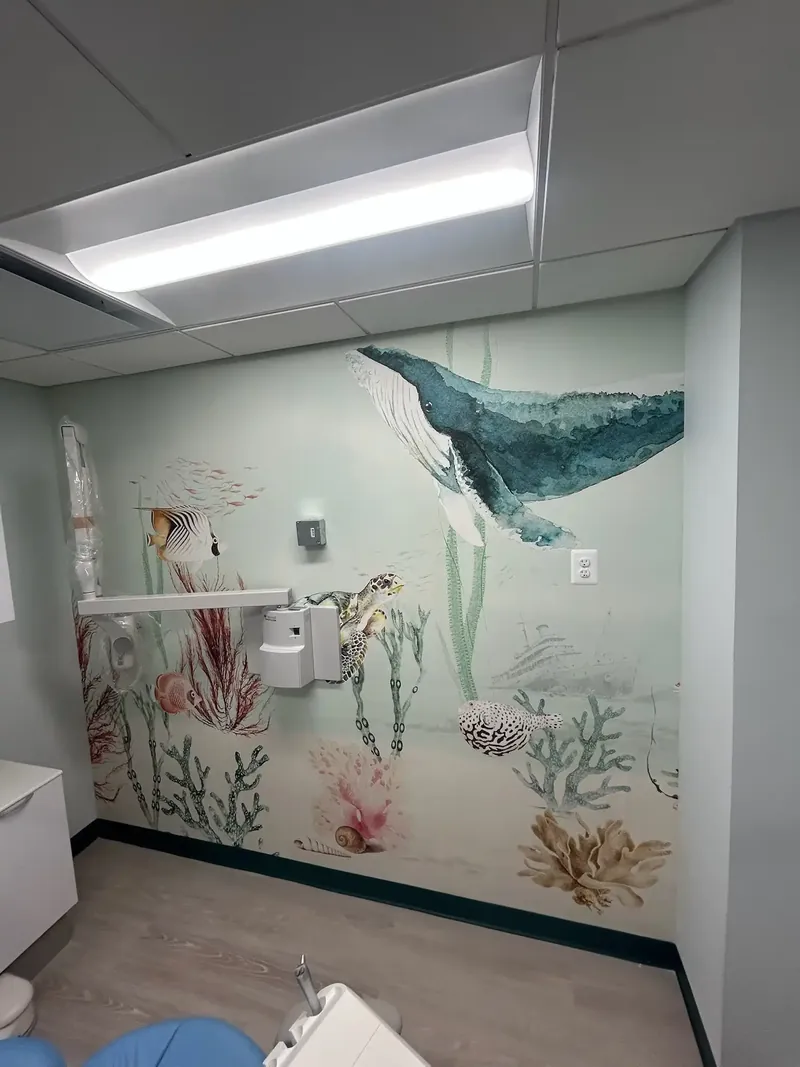
Brand graphics and full-height photographs are printed as numbered panels to the wall's measurements. They only work if the wall was measured accurately and the panels are hung in sequence with the overlap or bleed the printer allowed for. We prefer to measure the wall ourselves, or to see the printer's proof and panel layout before printing, so a logo does not land on an outlet or a door edge. Two of the photos on this page, an underwater scene in a dental treatment room and a curved exhibit wall, show panel work of this kind.
Codes, fire ratings and the specification
Many commercial interiors require wallcoverings with a specific fire classification, commonly a Class A rating tested to ASTM E84. The installer does not decide what is acceptable for a space; the specification and the building's code official do. What we can do is read the product data and the labels on the bolts that arrive, and flag anything that does not line up with the paperwork we were given. We keep the labels and run numbers for your records.
If there is no specification, for example a small shop owner refreshing one wall, we will talk through durability, cleaning and where the wall gets bumped, and suggest you check the rating with the product supplier.
Working around a business
A business that stays open while we work needs the job broken into pieces. We can start early, work late or come in at weekends where the building allows it, and we set up in one area at a time so the rest of the floor stays clean and passable. Paste odours from modern adhesives are mild, but we ventilate as the building permits. At the end of each day the work area is left safe and tidy.
On new build-outs we come in after the drywall is finished and primed and before the final flooring and trim where possible, so the wallcovering can be scribed to the floor and the base can sit tight against it. We coordinate with your general contractor on timing.
How each business uses its walls
In a restaurant, the lower part of a wall takes chair backs and the area near service stations takes splashes, so a scrubbable vinyl or a chair rail below a softer paper is worth discussing with your designer. Kitchens and food prep areas have their own finish requirements, which the health inspector and your designer will know. In retail, fixtures get moved and screwed into walls, so we leave you offcuts from the same run for patching, and labels so more can be ordered.
Clinics and treatment rooms are cleaned often and with strong products. The product data sheet lists which cleaners a wallcovering tolerates; that is worth checking before choosing a paper for a room that is wiped down every day. The same goes for a printed mural in a waiting room: it will be cleaned along with the rest of the room, so look at its data sheet too.
Surface prep for commercial walls
Drywall in a build-out is sometimes finished only to the level that suits paint, and joints and screw heads that disappear under paint can show through vinyl. Where the specification calls for a higher level of finish, it needs to be in place before we hang. We check walls on arrival and report anything that will show. The wall also needs the right primer for the product: many vinyls call for a specific primer so they can later be stripped without damaging the board.
What the job includes
The steps on a commercial job. On a larger project the schedule step is agreed with the general contractor.
Walk-through and specification
We look at the space, read the drawings and product data, and confirm which walls, which product and which adhesive.
Measure and order check
We confirm quantities against the bolts or panels ordered, including waste for double-cutting and pattern match.
Schedule
Agree working hours, access, parking and loading, and where we fit between other trades.
Wall check
Finish level, primer, moisture and flatness checked; anything that will show is reported before hanging.
Layout
Seam positions planned away from edges, outlets and sightlines; panels laid out in sequence for printed walls.
Hang
Strips or panels hung, double-cut where specified, reverse-hung where the maker requires, trimmed to base, ceiling and openings.
Clean and hand over
Adhesive cleaned off the face and trim, labels and offcuts handed over, area left ready for the next trade.
From the gallery
See all photos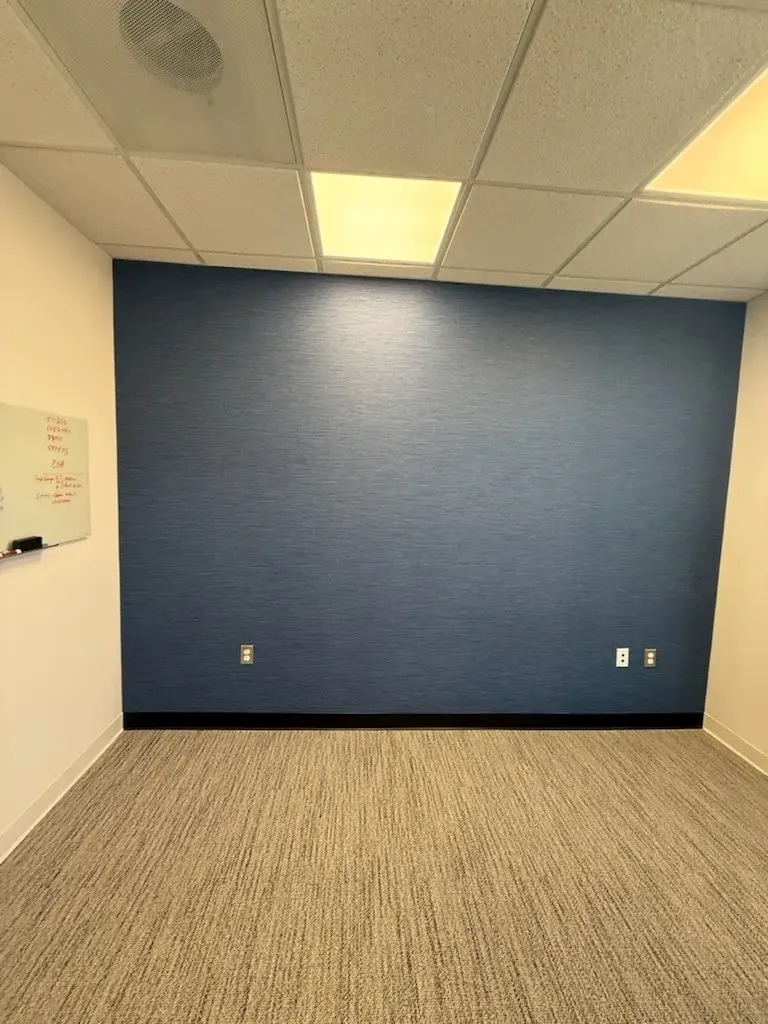
Questions
Can you work after hours?
Yes, where the building allows it. We can schedule early mornings, evenings or weekends so an office or shop can stay open during the day.
Do you work with our designer or general contractor?
Yes. We work from the designer's specification and fit into the contractor's schedule. Send us the drawings and the product data and we will confirm what we need on site.
What is a double-cut seam?
Two strips of wide vinyl are overlapped, then cut through both layers at once along a straight edge, and the two waste strips are peeled away. Because both edges come from the same cut, they meet exactly. It is the usual way to seam 54-inch commercial vinyl.
Does commercial wallcovering need a fire rating?
Often, yes, and Class A under ASTM E84 is the rating you will see named most. What a particular space needs is for the specification and your local code official to say. We compare the product data and bolt labels with that requirement before hanging.
Can you hang a printed mural or logo wall?
Yes. Printed walls are made as numbered panels. We prefer to measure the wall or review the panel layout before printing, so the important parts of the image land clear of doors, outlets and corners.
How do you protect our floors and furniture?
Drop cloths or floor protection under the work, furniture moved and covered as agreed, and the area cleaned at the end of each working day.
Get an estimate
Tell us about the wall. We call back within one business day.